• Home
  • About 
    • Who We Are
    • Code of Behavior
    • Excom
    • Advisers
  • Join Us 
    • Membership
    • Membership Interest Form
    • Partnership
  • Events 
    • All Events
  • Resources 
    • News
    • Mapping AI Adoption Study
    • Cyber Threat Intelligence
    • Leadership Podcasts
    • Webinars
  • …  
    • Home
    • About 
      • Who We Are
      • Code of Behavior
      • Excom
      • Advisers
    • Join Us 
      • Membership
      • Membership Interest Form
      • Partnership
    • Events 
      • All Events
    • Resources 
      • News
      • Mapping AI Adoption Study
      • Cyber Threat Intelligence
      • Leadership Podcasts
      • Webinars
Contact Us

  • Home
  • About 
    • Who We Are
    • Code of Behavior
    • Excom
    • Advisers
  • Join Us 
    • Membership
    • Membership Interest Form
    • Partnership
  • Events 
    • All Events
  • Resources 
    • News
    • Mapping AI Adoption Study
    • Cyber Threat Intelligence
    • Leadership Podcasts
    • Webinars
  • …  
    • Home
    • About 
      • Who We Are
      • Code of Behavior
      • Excom
      • Advisers
    • Join Us 
      • Membership
      • Membership Interest Form
      • Partnership
    • Events 
      • All Events
    • Resources 
      • News
      • Mapping AI Adoption Study
      • Cyber Threat Intelligence
      • Leadership Podcasts
      • Webinars
Contact Us

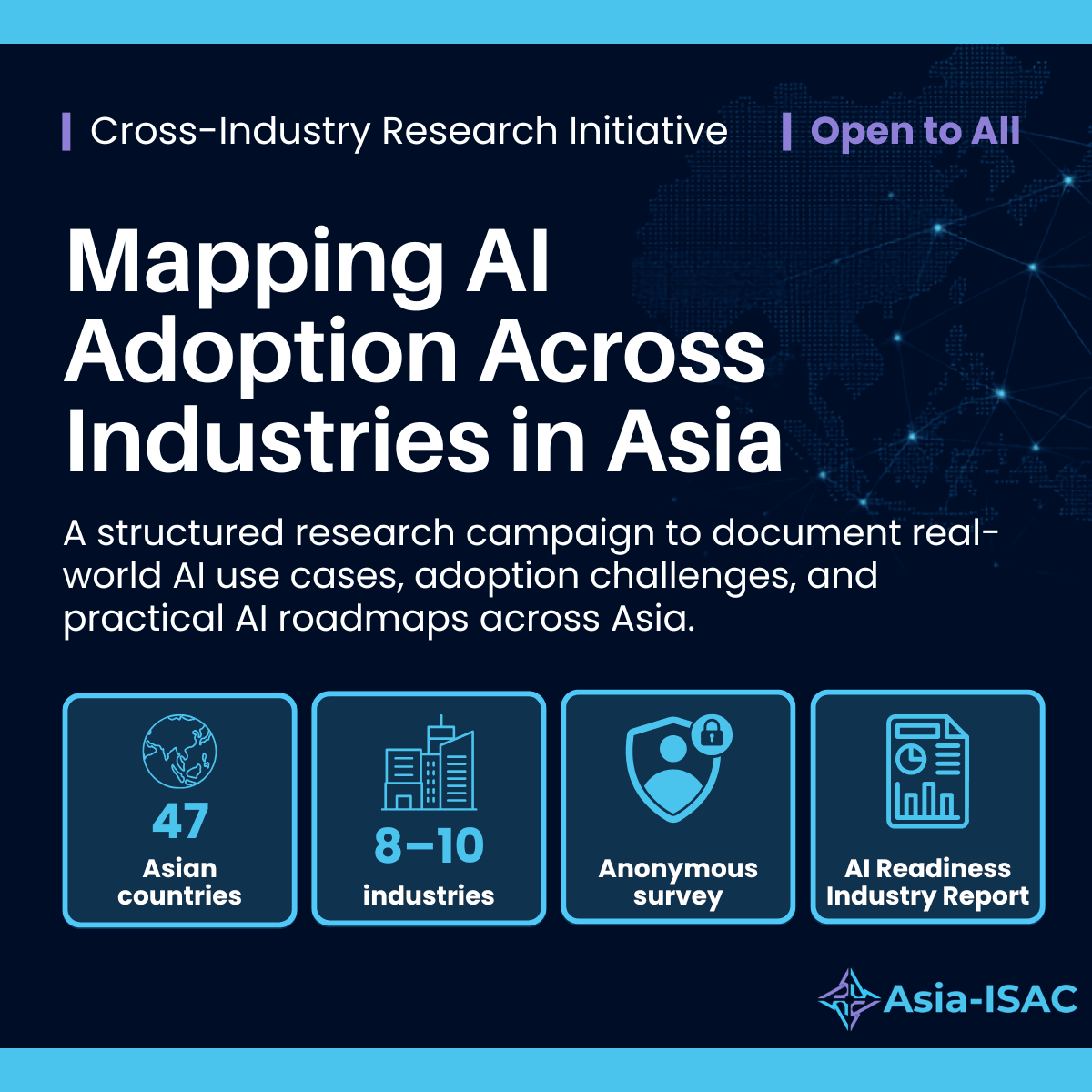
𝗔𝘀𝗶𝗮-𝗜𝗦𝗔𝗖'𝘀 𝗔𝗜 𝗔𝗱𝗼𝗽𝘁𝗶𝗼𝗻 𝗦𝘁𝘂𝗱𝘆 𝗶𝘀 𝗻𝗼𝘄 𝗼𝗳𝗳𝗶𝗰𝗶𝗮𝗹𝗹𝘆 𝗹𝗮𝘂𝗻𝗰𝗵𝗲𝗱.

Section image

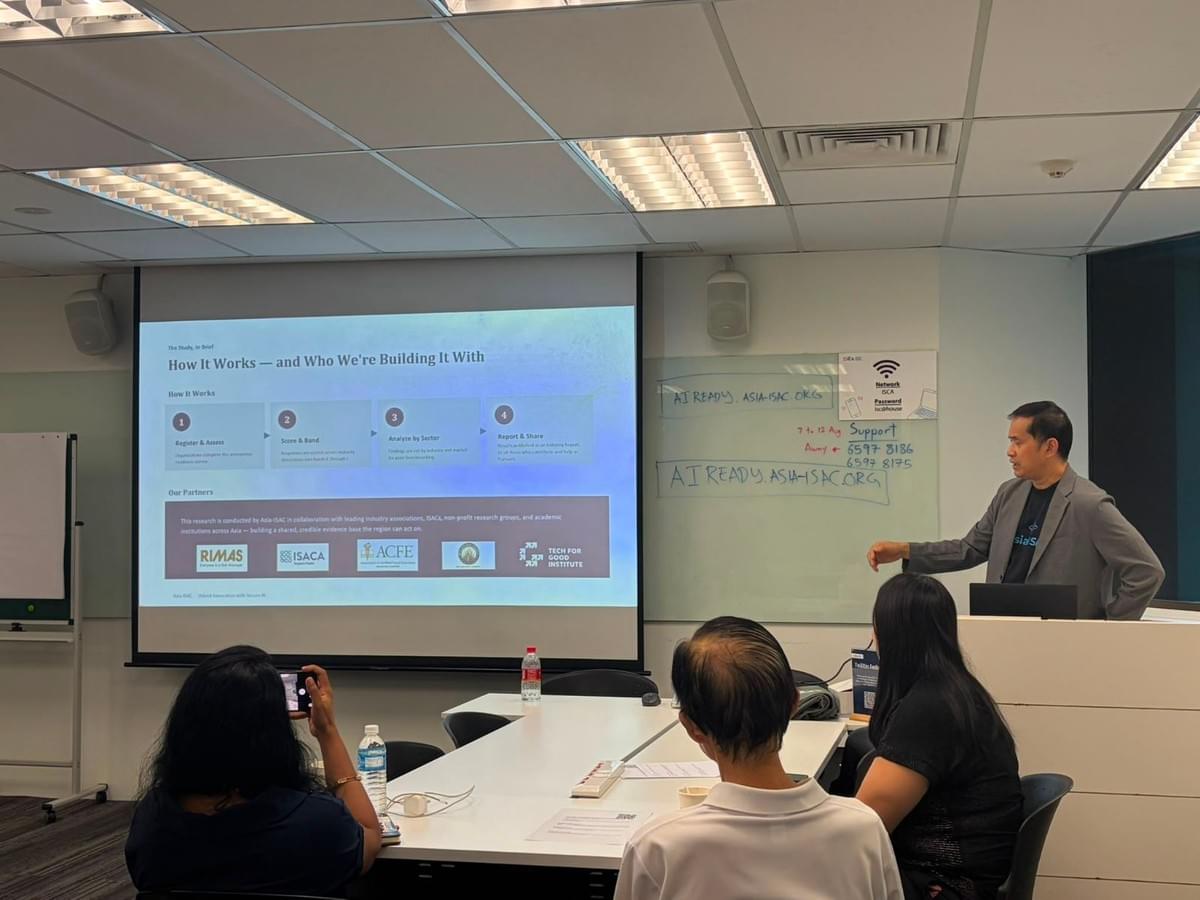
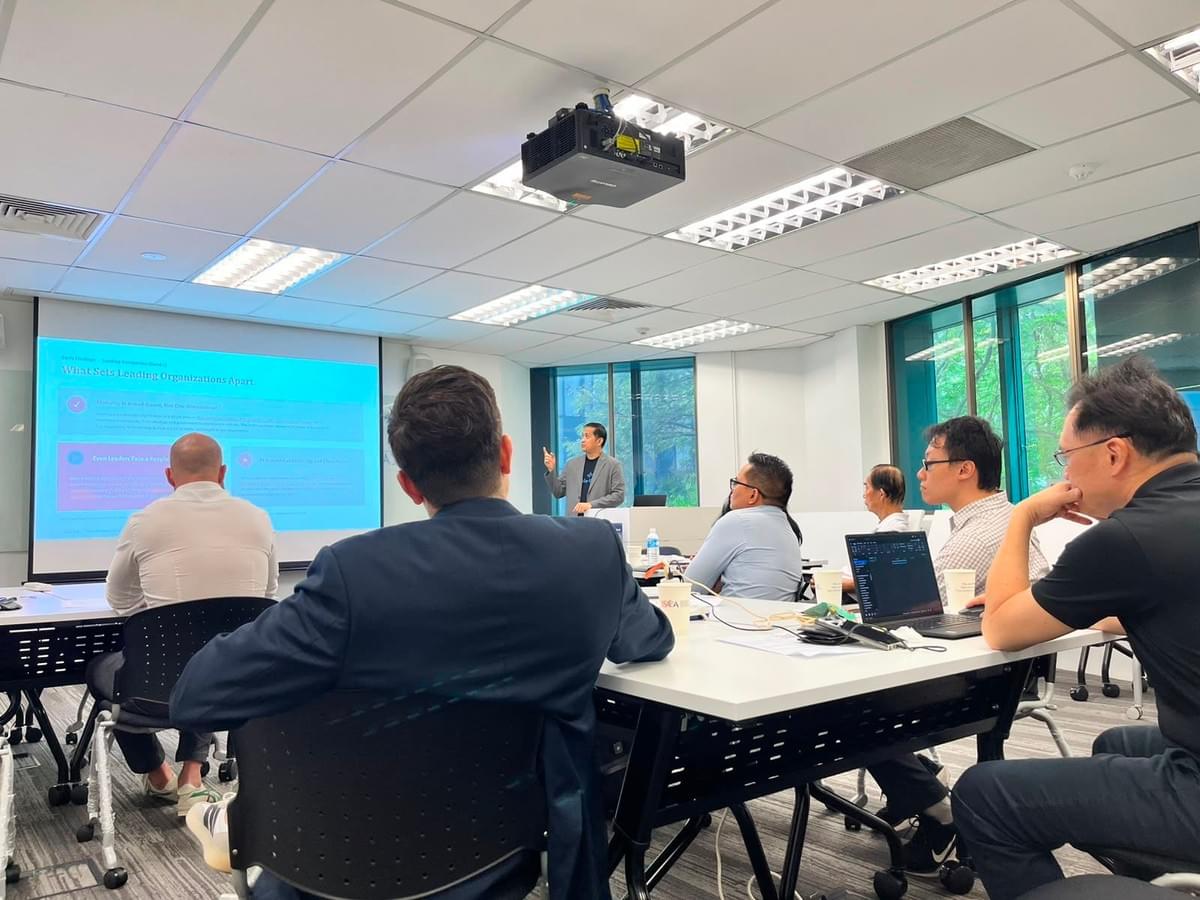
We marked the launch of "Mapping AI Adoption Across Industries in Asia" with an executive roundtable bringing together practitioners and leaders across the region. The discussion previewed the questions at the heart of the study: how are organizations really using AI, what's slowing adoption, what hasn't worked as expected, and what would build more confidence over the next 18 months.

AI is already creating value in productivity, investigations, software development, security operations, and customer-facing work. But the conversation kept circling back to the same point: sustainable AI adoption is an organizational challenge as much as a technology one.

The tables were moderated by three members of the Asia-ISAC Execom, each bringing a distinct lens:
Ivy Wong's table focused on governance, cybersecurity, and human judgement, treating AI readiness and cyber readiness as interconnected, using a governance-management-operations lens for guardrails and accountability, and preparing for the shift from generative AI to agentic AI, where systems act with greater autonomy.

James Cruz's table moved from efficiency to trusted scale, tying adoption to measurable outcomes like data analysis, customer acquisition, and software-development savings, while cautioning that faster adoption isn't automatically better adoption without stronger guardrails and cost discipline around model use.

Hayato Kiriyama's table explored step-by-step adoption across ASEAN, noting productivity gains from tools like Microsoft Copilot alongside real concerns on
cybersecurity, compliance, and workforce readiness, with regional approaches varying, Singapore seen as more flexible, other markets as more government-driven.

This is only the beginning. Join the conversation and help shape the region's first AI Readiness Industry Report.

Take the survey https://www.asia-isac.org/mapping-ai-adoption
Section image

Section image

Subscribe
Previous
Asia-ISAC Newsletter
 Return to site
Profile picture
Cancel
Cookie Use
We use cookies to improve browsing experience, security, and data collection. By accepting, you agree to the use of cookies for advertising and analytics. You can change your cookie settings at any time. Learn More
Accept all
Settings
Decline All
Cookie Settings
These cookies enable core functionality such as security, network management, and accessibility. These cookies can’t be switched off.
These cookies help us better understand how visitors interact with our website and help us discover errors.
These cookies allow the website to remember choices you've made to provide enhanced functionality and personalization.
Save